Exploring Moissanite: A Brilliant Alternative to Diamonds
Intro
Moissanite, though lesser known than its diamond counterpart, is carving out a niche in the world of gemstones. This article aims to unpack the many layers that make moissanite not just an alternative, but a fascinating choice for those embarking on the journey of jewelry shopping. We’ll navigate through its origins, unique qualities, and how it stands in contrast to diamonds—not just in beauty, but in ethical considerations, market presence, and practicalities when purchasing.
Gemstone Overview
Definition and Characteristics
Moissanite is a naturally occurring mineral, originally discovered in a meteorite crater in Arizona by Henri Moissan in 1893. Composed mainly of silicon carbide, it showcases stunning brilliance, often surpassing that of diamonds on the refractive index scale. With its optical properties, moissanite has a unique fire and scintillation; it sparkles in a way that can almost dazzle the untrained eye.
Over the years, moissanite has transitioned from its rare natural form to a more accessible lab-created variety, which maintains all the captivating characteristics but is available more abundantly. The color usually ranges from colorless to near-colorless, depending on the quality of the stone.
"Moissanite stands as a symbol of innovation in gemstone creation, appealing to both ethical buyers and those seeking shimmering beauty."
Classification of Gemstones
In the realm of gemstones, moissanite falls under the category of synthetic or lab-created stones. This distinguishes it from gemstones like diamonds, sapphires, and rubies, which are mined from the Earth. However, it also shares an affinity with natural stones due to its distinctive properties and aesthetic value. Thus, it’s essential to view moissanite as a legitimate contender in the gemstone market while considering its aristocratic appeal in jewelry design.
Properties of Gemstones
Physical Properties
Moissanite is not only about looks; its physical properties often entice connoisseurs. With a hardness rating of 9.25 on the Mohs scale, moissanite is exceptionally durable. This makes it suitable for everyday wear, quite unlike soft stones that scratch easily. To further delve into its physicality:
- Brilliance: Moissanite captures light beautifully, giving it a vibrant sparkle.
- Durability: Its hardness means it’s resistant to chipping and scratching.
- Thermal Conductivity: Moissanite dissipates heat quickly, making it easy to differentiate from diamonds when assessed with a diamond tester.
Chemical Properties
At the chemical level, moissanite is composed primarily of silicon carbide, which gives it notable qualities. This compound allows for the unique way it interacts with light, establishing its distinct visual allure. The stone's crystalline structure also contributes to its resilience and overall performance in various settings. Different grades of moissanite are often defined by their clarity and color, with the top-tier stones appearing almost indistinguishable from diamonds.
In summary, moissanite presents itself not only as a substitute for diamonds but as a gem in its own right, with its own story and advantages. As we proceed further into the exploration of moissanite’s characteristics and market positioning, we’ll delve into the ethical dimensions and buyer considerations, helping readers navigate their choices more thoughtfully.
Prelude to Moissanite
In the realm of gemstones, moissanite stands out not only for its striking resemblance to diamonds but also for its unique backstory and diverse characteristics. Understanding this fascinating stone is essential. Not just for buyers, but for those looking into ethical implications, sustainability, and market trends. Moissanite has carved a niche for itself, offering an attractive alternative to traditional diamonds. An increasing number of consumers are reevaluating their choices concerning gemstones, and moissanite's allure is something that shouldn’t be overlooked.
Definition and Origin
Moissanite is a silicon carbide crystalline structure, distinctly known for its brilliance and fiery sparkle that rivals diamonds. Discovered in 1893 by Henri Moissan, a French chemist, it originated from a meteorite crater. This place of origin imbues moissanite with a cosmic charisma rarely found in gemstones harvested from the Earth’s crust. Initially, moissanite was almost impossible to obtain in gemstone quality. However, with advancements in technology, it is now synthesized for the jewelry market, offering consumers a beautiful and ethical option.
History of Moissanite Discovery
The journey of moissanite starts quite compellingly with its inception linked to celestial phenomena. When Henri Moissan first encountered moissanite in a meteorite, he was largely surprised by the stone's appearances. In the early 20th century, interest in this unusual crystal was limited. It wasn’t until the late 1990s that technology allowed for high-quality synthetic creation, making the stone more accessible to the public.
Since then, its popularity surged dramatically. Why? Because of its remarkable features. People began to realize it could sparkle like a diamond while being considerably more budget-friendly. As moissanite gained traction in jewelry stores, it reshaped how many think about alternatives to traditional diamonds.
"Moissanite may very well be the gemstone of the future, combining beauty with ethical considerations like no other."
This sentiment echoes the feelings of many who have become enchanted by the stone’s durability, brilliance, and the environmental consciousness it evokes. Moissanite's rich history and adaptability in modern jewelry is a testament to its growing relevance, especially among gemstone enthusiasts and influencers in the jewelry market.
As this article unfolds, we’ll dive deeper into physical properties, comparisons to diamonds, and the broader implications that accompany the choice of moissanite in jewelry. Understanding these aspects can empower jewelry buyers to make informed decisions, highlighting moissanite not merely as a cheap substitute but as a worthy gemstone in its own right.
Physical Properties of Moissanite
Understanding the physical properties of moissanite is crucial for anyone interested in this unique gemstone. Not only do these properties contribute to its attractiveness, but they also help distinguish it from other stones, especially diamonds. Moissanite’s properties play an integral role in the discussions surrounding its value, beauty, and practicality in jewelry making.
Crystal Structure and Composition
Moissanite is composed of silicon carbide, a compound that gives it a distinctive crystal structure. Its crystal system is hexagonal, which is shared with various other gemstones, but it’s the way these crystals form that sets moissanite apart. When light enters a moissanite stone, it interacts uniquely with this crystal structure.
The arrangement of silicon and carbon atoms in a moissanite crystal creates a lattice that is quite rigid and contributes to the stone's remarkable durability. Interestingly, the same structure provides moissanite with superior fire and brilliance compared to diamonds. When you look at a moissanite ring under light, the dispersion—or the spectrum of colors emitted—appears more colorful than what you’d observe in a diamond.
Refractive Index and Brilliance
One of the most notable physical properties of moissanite is its high refractive index, which ranges between 2.65 to 2.69. This is significantly greater than that of diamonds (2.42). The refractive index measures how much a material bends light, and moissanite's ability to bend light leads to phenomenal brilliance and fiery flashes when set in jewelry.
Moreover, the brilliance of a gemstone depends on its cut, and moissanite is often cut to optimize its luminous properties. With the right cut, moissanite can appear even more brilliant than traditional diamonds, providing that visual wow factor many seek in a precious stone. The way it interacts with light makes it a standout choice for those who appreciate sparkle and fire.
Hardness and Durability
When considering any gemstone for purchase, hardness is a key factor, and moissanite does not disappoint. On the Mohs scale of mineral hardness, moissanite ranks at a solid 9.25, just below diamonds which score a 10. This property makes moissanite an exceptional choice for everyday wear in jewelry, as it can withstand scratches and abrasions better than many other gems.
In addition to hardness, durability is vital. Moissanite is chemically stable and resistant to breaking or shattering when set correctly, which suggests it can withstand the rigors of daily life with ease. This combination of hardness and durability makes it not just an aesthetically appealing option, but also a practical one that can last a lifetime.
"The intricate details of moissanite’s structure reveal its stunning brilliance and impressive durability, making it a compelling alternative to diamonds."
Comparison with Diamonds
The age-old debate surrounding diamonds and moissanite continues to captivate the jewelry industry. As more consumers gravitate towards ethically sourced and more affordable options, understanding how moissanite stacks up against diamonds becomes crucial. There are several specific elements that one should consider: visual similarities, performance characteristics, and the overarching value and market perception of these gemstones.
Visual Similarities
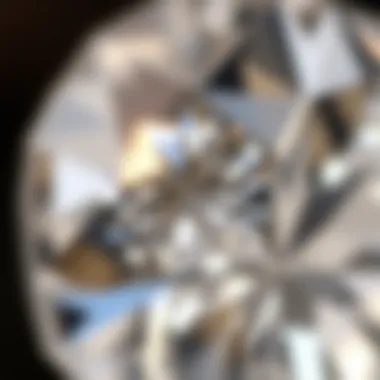
At first glance, moissanite appears strikingly comparable to diamonds. Both stones boast exceptional brilliance and clarity, but there are subtler differences that discerning eyes can spot. Moissanite tends to have a bit more fire, which refers to the colorful flashes you see as the stone is moved under the light. This intensity of colors sets it apart and makes it uniquely captivating.
However, to the untrained eye, the two can be nearly indistinguishable. Moissanite is often cut in a way that maximizes its light performance, giving it an exceptional sparkle that draws users in like moths to a flame. It's important for potential buyers to understand these nuances, particularly when purchasing jewelry for special occasions.
Performance Characteristics
When comparing performance characteristics, there are specific metrics where moissanite outshines diamonds. The hardness of moissanite is rated at 9.25 on the Mohs scale, making it one of the hardest known gemstones, just behind diamonds. This means it's exceptionally durable and resistant to scratches, ideal for daily wear in rings or other jewelry.
Furthermore, moissanite excels in thermal conductivity, which plays a crucial role in how these stones interact with light. When subjected to direct heat, moissanite doesn't react in the same way diamonds do. This feature can sometimes cause confusion in settings where diamonds might be tested for authenticity with a thermal probe.
In terms of brilliance, moissanite has a higher refractive index than diamonds, giving it that extra sparkle. Yet, some may prefer the more understated brilliance of diamonds, which can evoke a sense of traditional elegance that moissanite may not emulate as effectively.
Value and Market Perception
The financial aspect of purchasing these gemstones cannot be ignored. Moissanite prices are significantly lower than their diamond equivalents, making them an attractive alternative for consumers on a budget. For instance, a one-carat moissanite can cost a fraction of what a similar quality diamond would demand.
Market perception is shifting as well. More consumers are recognizing the ethical implications of diamond sourcing and are increasingly opting for moissanite as a clear choice — not just cost-effective but also conflict-free. This shift may well reshape the landscape of the jewelry industry in upcoming years, reflecting broader societal values around sustainability and responsible sourcing.
"Choosing moissanite over diamonds is not just an economical decision; it represents a shift towards more ethical consumerism."
Ethical Implications of Moissanite
Examining the ethical implications of moissanite is vital as it sheds light on how this gemstone fits into a larger conversation about responsible sourcing and consumer choices. With modern consumers becoming increasingly aware of the ethical footprints of their purchases, moissanite presents itself as an appealing alternative to traditional diamonds. Such a shift in consciousness encourages deeper scrutiny of the moral dimensions of gem purchasing.
Sustainability and Sourcing
When we discuss moissanite, sustainability takes center stage. Unlike diamonds, which often involve extensive environmentally damaging mining practices, moissanite is either sourced from naturally occurring deposits or created synthetically in labs. This laboratory production minimizes environmental harm.
- Lower Impact: The environmental degradation associated with diamond mining is significant. By opting for moissanite, buyers can avoid contributing to this destruction.
- Controlled Conditions: Moissanite created in labs ensures that the entire process, from creation to sales, is more regulated. Thus, companies can guarantee a more sustainable approach to producing this brilliant stone.
For those looking to keep their nature footprint in check, moissanite stands out. By choosing a stone that is made with attention to sustainability, consumers can embrace a lifestyle that echoes their values. This not only contributes to earth-friendly practices but also fosters awareness among other buyers of the importance of sustainable choices.
Conflict-Free Considerations
The notion of conflict-free gems has gained attention over the years, especially due to the troubling humanitarian issues tied to diamond mining in certain regions of the world. When considering moissanite, there's significant reassurance that these ethical concerns are minimized, if not entirely eliminated.
- Traceability: Lab-created moissanite allows consumers to trace the origins of their stones. Buyers can rest easy knowing that their purchase does not fund violent conflicts or exploit workers.
- Easier Monitoring: For naturally sourced moissanite, while it still falls short of the comprehensive tracking available for lab-grown options, the impact on conflict zones is less pronounced than that of diamond mining.
In essence, consumers have the opportunity to invest in a gemstone that prioritizes ethical principles without compromising on beauty or durability. The growing popularity of moissanite not only reflects an aesthetic choice but also a notable shift in how society views valuable materials and their sourcing. As an educated buyer, one can take pride in choosing a stone that embodies both elegance and responsible consumption.
Jewelry Market Landscape
The jewelry market is a complex, ever-evolving space that reflects cultural trends, shifting consumer preferences, and evolving ethical standards. Understanding the current landscape of moissanite jewelry is paramount for anyone interested in gemstones. Moissanite, with its increasing popularity, has carved out a significant niche that speaks to both aesthetics and ethics, attracting an audience eager to make informed purchasing decisions.
Trends in Moissanite Jewelry
In the past few years, we’ve witnessed a remarkable shift in consumer behavior—the awareness around ethically sourced gemstones is on the rise. Moissanite is leading the charge, setting trends that resonate deeply with buyers looking to align their values with their purchases.
- Emphasis on Sustainability: Many consumers today are drawn to moissanite due to its sustainable nature. Unlike mined diamonds, moissanite is often lab-created, which reduces the environmental impact.
- Versatile Designs: Jewelers are getting creative, offering a variety of designs that showcase moissanite’s brilliance. From classic solitaires to intricate halo settings, the choices seem endless.
- Affordable Luxury: Moissanite jewelry offers the sparkle of diamonds without the hefty price tag. This affordability has made it an attractive option for young couples or anyone looking to get a stylish piece without breaking the bank.
Popular Designs and Settings
The beauty of moissanite lies not only in its sparkle but also in the myriad of settings available. Jewelers have embraced this stone with open arms, creating stunning pieces that cater to various tastes and styles.
- Classic Solitaires: A timeless favorite, solitaires allow the moissanite to take center stage. Its high refractive index ensures that it dazzles in even the simplest of settings.
- Vintage Styles: Designs reminiscent of bygone eras have made a strong comeback. Art Deco and Victorian-inspired settings that feature intricate details and filigree work are particularly popular.
- Modern Geometric Designs: For those looking to make a statement, geometric settings featuring unique shapes and arrangements have gained traction.
Leading Brands and Artisans
As the market for moissanite grows, several brands and artisans have emerged as leaders in the field, each offering their unique take on this incredible gemstone.
- Charles & Colvard: Often regarded as the pioneer of moissanite, they have built a strong reputation for high-quality stones and innovative designs. Their commitment to ethical sourcing is a major selling point.
- Miadore: This brand focuses on custom designs, allowing customers to create unique pieces featuring moissanite. This service caters to an audience that values individuality.
- Verragio: Known for their exquisite settings, Verragio incorporates moissanite in many of their luxurious designs, appealing to those looking for elegance and sophistication.
Moissanite's increasing prominence in the jewelry market speaks volumes about consumer demands and values. The shift towards representation of ethics, affordability, and innovation is transforming how we think about fine jewelry, offering a suitable alternative that dazzles just like the traditional diamond.
Buying Guide for Moissanite
When it comes to purchasing moissanite, knowledge is your best friend. Just like choosing a diamond, making an informed decision about moissanite encompasses various factors that could make or break your experience. This section aims to clarify what you should consider when looking to acquire this captivating gemstone. The importance of this guide is rooted in the broader narrative of making ethical and financially sound choices in the realm of gemstone jewelry.
What to Look For in Quality Moissanite
Not all moissanite is created equal. With multiple manufacturers and varying qualities, understanding the essentials can prevent you from making a costly mistake. Here are key points to ponder:
- Cut: A well-cut moissanite will exhibit exceptional brilliance and fire, resembling the best diamonds. Look for an ideal or excellent cut rating when evaluating stones.
- Color: Moissanite can range from colorless to slightly tinted. A colorless stone is often the most desirable, although near-colorless can also be a good choice if you aim for a budget-friendly option.
- Clarity: Examine the stone for visible inclusions or blemishes. Higher clarity stones will generally boast fewer flaws. Grades may range from flawless to included, so opting for a stone rated VS1 or higher is wise for better visual appeal.
- Size: Keep in mind that moissanite appears larger than diamonds of the same carat weight. This is due to its lower density, so check the size based on what fits your style.
The combination of these factors determines the overall value and aesthetic of moissanite. Thus, take your time deliberating over them before making a purchase.
Certification and Grading
Another layer of assurance comes through certification. The importance of certification for moissanite cannot be understated. This provides a guarantee of the quality and authenticity of your stone, similar to diamonds that come with certification from well-known organizations.
When diving into certifications, be on the lookout for reputable grading labs, such as the International Gemological Institute (IGI) and the Gemological Institute of America (GIA). Their evaluations offer detailed insights into the characteristics of your moissanite, confirming you've made a sound investment.
In terms of grading, moissanite is often evaluated on the same parameters as diamonds: cut, color, clarity, and carat weight. Understanding these metrics is vital in ensuring you're not just buying a piece of jewelry but a quality gemstone. Always request to see the grading report when making a purchase. This way, you can compare stones and find one that perfectly matches what you envisioned.
To sum it up, purchasing moissanite is both an art and a science. By being shrewd in your approach and keeping these tips in mind, you set yourself up for success in finding a spectacular stone that meets your needs, whether it’s for an engagement ring or a unique piece to add to your collection.
Myths and Misconceptions
The conversation around moissanite is often clouded by myths and misconceptions, which can lead to confusion and mistrust among potential buyers. Understanding these fallacies is essential not just for gem enthusiasts, but also for consumers looking at ethical alternatives to traditional diamonds. As moissanite comes into its own in the jewelry market, it is important to address common misunderstandings to promote informed decision-making. Clarity in this area enhances appreciation of moissanite's unique features while allowing buyers to navigate the options with confidence.
Common Misunderstandings About Moissanite
Many people still don’t fully grasp what moissanite is, mistaking it for just another diamond substitute. Some of the most prevalent myths include:
- Moissanite is simply a fake diamond: This is a significant misconception. Moissanite is a unique gemstone in its own right, formed from silicon carbide. It possesses distinct chemical, optical, and physical properties, setting it apart from diamonds. Calling it a fake just undermines its brilliance and value.
- All moissanites look the same: It's not just one size fits all. Varieties exist with different sizes, shapes, and qualities. Just like diamonds, there's a spectrum of colors when it comes to moissanite. Some might favor a warmer tone while others prefer the cooler hues.
- Moissanite is less durable: While often compared to diamonds in terms of hardness, people may not realize that moissanite is actually quite resilient. Its hardness, measured at 9.25 on the Mohs scale, makes it an excellent choice for day-to-day wear. It can withstand everyday bumps better than most gems.
Distinguishing Between Moissanite and Diamonds
The ability to effectively tell moissanite apart from diamonds is key for anyone in the market for fine jewelry. Here are several points that help in distinguishing these two stones:
- Brilliance and Fire: Moissanite often exhibits greater brilliance and fire compared to diamonds. This is due to its higher refractive index, meaning it can reflect more light. In practice, this might mean that a moissanite sparkles even more vigorously than a diamond under certain lighting conditions.
- Color Grading: Diamonds are graded on a color scale from D (colorless) to Z (light yellow). Moissanite typically has a broader range of colors, often appearing whiter than diamonds of comparable grade due to its unique properties. It’s not uncommon for moissanite to look colorless even in lower-colored grades.
- Price Point: Comparatively, moissanite is significantly less expensive than diamonds. This discrepancy creates a perception issue; some assume lower price equates to lesser quality. However, moissanite’s affordability allows consumers to acquire larger stones or intricate designs without breaking the bank.
"Understanding the key differences enables consumers to make educated decisions while appreciating the beauty of each stone on its own terms."
In summary, addressing the misconceptions surrounding moissanite not only clarifies its standing in the jewelry industry but also allows potential buyers to appreciate its distinctiveness. By discerning facts from fiction, gemstone enthusiasts and novice buyers alike can engage more thoughtfully with their purchase choices.
Future of Moissanite in the Jewelry Industry
As we look ahead, it becomes increasingly clear that moissanite is carving out a significant niche within the jewelry market. This prominence is not simply a passing trend, but rather a reflection of changing consumer preferences that favor sustainable and ethically sourced materials. Moissanite's appeal lies not only in its stunning appearance but also in its storytelling—its origin from the stars, being a product of scientific marvel, resonates deeply with today’s conscientious buyers.
The evolution of consumer awareness around ethical issues associated with traditional diamond mining has opened the door for moissanite to gain traction. Many shoppers are seeking alternatives that offer beauty without the baggage of conflict or environmental degradation. Moreover, as these consumers become more educated about their options, the demand for moissanite is expected to surge.
Innovations and Technological Advances
Innovation is at the crux of the future of moissanite. Recent advancements in the synthesis of this gemstone have improved its quality and accessibility. These innovations make moissanite production not only more efficient but also more sustainable.
- Enhanced Production Techniques: New methods reduce the time needed to grow moissanite crystals. Advances in high-pressure, high-temperature (HPHT) methods have led to more consistent quality gems. This can streamline supply, fulfilling consumer demands without substantial environmental cost.
- Customization Capabilities: Many manufacturers are now able to offer custom cuts and sizes for moissanite gems. This means that consumers aren't stuck with what's available; they can have unique pieces tailored to their preferences, expanding the designer and retail landscape.
- Cutting-Edge Treatments: New treatments to enhance color and clarity are on the rise. This is beneficial as consumers are often looking for that distinct sparkle. Updated cutting techniques also increase brilliance, making moissanite stones even more appealing to jewelry lovers.
With each passing day, it becomes clearer that these innovations not only enhance the allure of moissanite but also reinforce its place in the market as a viable and exciting alternative to diamonds.
Potential Market Growth and Opportunities
The prospects for moissanite in the jewelry industry are increasingly promising. As the conversation around sustainability and ethical sourcing continues to evolve, retailers have the chance to tap into a lucrative market by promoting moissanite as an alternative.
- Growing Affordability: As technology advances, the cost of producing moissanite is likely to decrease, making it a more accessible option for everyday consumers. This is a boon for brands seeking to capture a wider audience, including millennials and Gen Z, who often prioritize value and ethics.
- Expanding Retail Channels: With growing awareness, moissanite is finding its place not only in specialized jewelry stores but also in mainstream retailers. The entry of established brands can lend credibility to moissanite and increase consumer confidence.
- Customization Trends: The market is trending towards more personalized shopping experiences. Retailers can capitalize on this by offering moissanite in various custom options, thus catering to individual tastes and preferences. Consumers are leaning more towards unique pieces that tell their personal stories.
In summary, the future of moissanite in the jewelry industry appears bright. The combination of technological advancements, rising consumer awareness of ethical considerations, and an inclination towards customization positions moissanite as a strong contender in a market that values both aesthetics and values.
Culmination
The exploration of moissanite as an alternative to diamonds reveals nuances that can influence both personal preferences and purchasing decisions. A thorough understanding of moissanite's properties, its historical context, and ethical implications enhances the appeal for many. These aspects culminate in making a well-informed choice—one that aligns with individual values and budgetary considerations.
Summarizing Moissanite's Appeal
Moissanite captivates with its remarkable brilliance and fire, often standing shoulder to shoulder with diamonds in terms of visual allure. One striking feature is its high refractive index, giving it a unique sparkle that some even consider superior to that of diamonds. Furthermore, its origin, born from meteoric events rather than traditional mining, adds charm and intrigue. This gemstone demonstrates a commitment to sustainability; many manufacturers prioritize eco-friendly practices, which resonate strongly in today's environmentally conscious culture. For gemstone enthusiasts, the allure of moissanite isn't just skin-deep; its ethical sourcing opens up new conversations about the responsibilities associated with gemstone ownership.
Encouragement for Informed Decisions
When contemplating a purchase, whether it's a moissanite engagement ring or a simple pair of earrings, knowledge is power. Research plays a pivotal role in distinguishing between various qualities of moissanite. Understanding its grading system, which includes criteria like cut, color, and clarity, enables buyers to select stones that meet their expectations without compromise. Moreover, exploring different makers and artisans can unveil unique pieces that speak to individual aesthetics. By investing time to educate themselves, consumers can not only avoid common pitfalls but also reap the benefits of finding a piece that truly resonates with their values and style. Understanding the entire spectrum of moissanite's advantages versus conventional diamonds positions buyers to embrace this remarkable gemstone fully.