Comparing 2 Carat Round and Oval Diamonds: Key Insights
Intro
When it comes to choosing a diamond, many buyers wrestle with the age-old question: round or oval? For the gem lovers and potential buyers embarking on the diamond journey, understanding the nuances between 2 carat round and 2 carat oval diamonds can make all the difference. This analysis digs deep into the practical and aesthetic factors that separate these two styles while keeping buyer preferences front and center.
Having a grasp on the differing characteristics of these diamond shapes isn’t just about aesthetics, though that plays a big role. Factors such as cut, dimension, and even market trends can shift your choice dramatically. Knowing these can guide you to a diamond that not only fits your style but also holds its value in the long run.
We will break down the analysis into several key areas. First up, we'll provide a gemstone overview, including definitions and characteristics that are fundamental to understanding diamonds. Next, we'll look into the properties of gemstones, highlighting both physical and chemical aspects to give a comprehensive picture of what you're buying. It's about laying the groundwork for informed decisions, so the journey into the sparkle of diamonds can be as enjoyable as it is enlightening.
Gemstone Overview
Definition and Characteristics
At its core, a diamond is a form of carbon that has been subjected to extreme heat and pressure beneath the Earth's surface. Over time, these natural diamonds become crystallized, known for their unmatched hardness and light-reflecting abilities. In particular, round diamonds often feature a classic shape that maximizes brilliance and fire, while oval diamonds tend to elongate the finger, providing a unique aesthetic that some buyers find more appealing.
Both shapes possess their own charm, attracting different tastes and preferences. It's important to understand that while carat weight is an indicator of size, the cut plays a crucial role in determining the overall appearance of the diamond. Each cut affects how light interacts with the stone, contributing to its sparkle.
Classification of Gemstones
Gemstones are broadly classified based on their origins and compositions. Diamonds, particularly, belong to the group of precious stones and can be categorized according to their color, clarity, and cut. Different standards exist in the industry for certifying these characteristics, with some reputable organizations providing clarity ratings and certifying cuts. Understanding these classifications helps buyers sift through the noise in a crowded market.
- Color: While most people picture diamonds as colorless, they can appear in a rainbow of shades, from light yellow to vivid blues.
- Clarity: This refers to the presence of inclusions or blemishes in the diamond, which can influence its overall value.
- Cut: The shape and facets of the diamond can impact its ability to reflect light beautifully.
Understanding these classifications enables buyers to make a choice that suits their preferences and needs.
"When investing in a diamond, knowledge is your best friend. It paves the way for choices that resonate with your personal style as well as your financial considerations."
As we delve deeper into the properties of 2 carat round versus 2 carat oval diamonds, keep in mind how these elements come together to form an engaging narrative for your unique diamond selection journey.
Foreword to Diamond Shapes
Understanding the various shapes of diamonds is essential for anyone interested in these precious gemstones. The shape of a diamond can influence not only its appearance but also its market value and desirability. When we talk about diamonds, the shape often sets the tone for personal style and can act as a form of self-expression. This analysis focuses specifically on two of the most sought-after shapes, round and oval, particularly in the 2 carat category.
Both shapes have their own unique characteristics and appeal, so it’s crucial to understand what separates them. Unlike some shapes that may fall out of fashion or become niche, round and oval diamonds have consistently maintained their popularity over the years.
Diving into the intricacies of these shapes will help buyers make informed choices, whether they are purchasing for an engagement ring, a statement piece, or an investment. Factors like light performance, perceived size, and compatibility with various settings come into play. By giving this topic its due attention, we create a platform for informed discussions and savvy purchasing decisions.
Overview of Popular Diamond Shapes
When browsing through options, shoppers are frequently met with a multitude of diamond shapes. It often starts with the classic round, which tends to embody the traditional image of a diamond. However, ovals have been making waves, particularly for those looking for something more distinctive. Here’s a brief look at some common shapes:
- Round: Timeless and has a standardized cut that maximizes brilliance.
- Princess: Square cut that offers a modern twist but can be prone to chipping.
- Emerald: Rectangular with step cuts, gives a vintage feel and has a sophisticated allure.
- Cushion: Squarish with rounded corners, very romantic looking and reminiscent of old mine cuts.
- Oval: Elongated shape that creates a perception of larger size and elegance.
While each shape possesses its own charm, round and oval diamonds emerge as the frontrunners for various occasions, primarily due to their versatility and aesthetic qualities. The round diamond often reflects the ideal of perfection in symmetry and light performance, while the oval offers a fresh and unique look with its elongated form.
Cultural and Market Significance
Diamond shapes are often a reflection of social norms and personal values. In many cultures, the round diamond is seen as a symbol of enduring love and commitment. It has permeated popular culture through media, influencing buyer preferences over generations. But what about the oval shape? Its rise in popularity aligns with a modern approach to beauty, allowing for individuality without straying too far from tradition.
Market trends also indicate shifts in consumer preferences. While round diamonds continue to dominate sales, oval diamonds have started to carve out their niche. The increasing interest might be tied to celebrities endorsing this cut or simply a growing desire for something different.
Overall, understanding the cultural background and market dynamics surrounding diamond shapes brings a deeper appreciation for the choices buyers make. Both round and oval diamonds hold valuable places in both historical and contemporary contexts, making the discussion not just about aesthetic qualities but also about cultural significance.
Understanding Carat Weight
Carat weight plays a pivotal role in the diamond selection process. It's not just a number; it often serves as a yardstick for value, beauty, and presence. Understanding carat weight is essential for anyone looking to buy a diamond, as it directly influences not only price but also how the stone looks on the finger.
Definition of Carat
The term "carat" comes from the carob seeds once used in the trading of gemstones due to their uniform weight. In modern contexts, a carat is equivalent to 200 milligrams. The significance of this measurement goes beyond mere weight; it serves as an indicator of size and, to some extent, reflects the diamond's overall dimensions. A 2 carat diamond can appear very different depending on its cut and shape. For example, a well-cut round diamond might look larger than a similarly weighted oval diamond because of its proportions and how light interacts with the facets.
An important factor to keep in mind is how carat weight can sometimes overshadow other crucial aspects of the diamond, such as clarity and color. Buyers might focus on the carat number, losing sight of the bigger picture, which includes the quality of the cut and the characteristics that make each diamond unique.
Impact of Carat on Value
Carat weight significantly affects a diamond's price. Generally, the more carats, the higher the price. However, this relationship isn’t linear due to the rarity factor. For instance, while a 2-carats diamond is not double the price of a 1-carat diamond, it can often be several times more expensive. This hike occurs because larger diamonds are simply rarer. It's essential to approach your purchase with a balanced mindset; higher carat weight may not equate to better value if the qualities of the diamond compromise its beauty.
- Additional Considerations:
- Always look at the overall quality and not just the carat weight.
- The market often shows a preference for certain shapes. For example, round diamonds generally command a higher price per carat compared to oval diamonds.
- Remember that how a diamond is viewed is also influenced by how it is set in jewelry; a well-placed diamond can enhance its visual impact.
That said, it's crucial for buyers to consider not only their budget but also how they want the diamond to complement their style, elevating personal preferences over mere numbers.
"In the world of diamonds, understanding carat weight can give you an edge in making informed decisions while ensuring that you choose a gem resonating with your style and values."
Before embarking on your diamond journey, grasping the nuances of carat weight will enable you to make choices that reflect both aesthetic preference and financial acumen.
Round Diamonds: Characteristics
Round diamonds stand as the benchmark in the gemstone world, often synonymous with timeless elegance and classic beauty. Their universal appeal makes them a popular choice for engagements and special occasions alike. Understanding the characteristics of round diamonds is crucial for enthusiasts and potential buyers alike, as these features directly affect both their aesthetic allure and market value.
Cut Quality and Brilliance
The cut quality of a round diamond plays a pivotal role in determining its overall brilliance. A well-executed cut, adhering to ideal proportions, allows light to enter the diamond and reflect back, creating a mesmerizing sparkle. This cut complexity is where round diamonds shine. Characteristics such as depth percentage and table size can significantly influence how light interacts with the stone. For instance, standard proportions typically include a depth of around 61-62.5% and a table of approximately 53-57%.
An excellent cut not only enhances brilliance but also affects the way a diamond looks in different lighting conditions. Buyers often prefer round diamonds for their ability to exhibit superior fire and scintillation due to their facets, making them look larger and more radiant than their actual size.
Dimensions and Proportions
Dimensions and proportions are another key aspect to consider when evaluating round diamonds. These stones come in a variety of carat weights, yet two carat diamonds often fall under scrutiny regarding size perception. The average diameter of a 2 carat round diamond typically ranges from 8.1mm to 8.3mm, depending on the cut.
A diamond’s proportions can also influence its visual weight. The round shape means that it can appear larger compared to an oval or princess cut of the same carat weight, due to its circular outline reflecting more light uniformly. For customers, this means that the choice between round and oval diamonds may also hinge on size perception, as a round diamond with ideal dimensions can appear brilliant and more substantial.
Popularity and Trends
Round diamonds have a storied history of being the most sought-after diamond shape in the market. Since their popularization in the 20th century, their demand has remained consistently high, setting trends that other shapes often follow.
Currently, round diamonds represent approximately 75% of all diamonds sold, making them the gold standard in the industry. This enduring preference can be attributed not just to tradition but also to their versatility in different settings—from solitaires to elaborate three-stone rings. Furthermore, modern jewelry trends lean heavily toward customization, thus allowing buyers to pair round diamonds with various band styles, metals, and design elements.
As contemporary consumers become increasingly aware of ethical sourcing, many are now seeking lab-grown round diamonds. This alternative allows buyers to enjoy the same stunning beauty while making choices aligned with their values.
"Round diamonds aren't just a timeless choice; they are the embodiment of versatility, adapting effortlessly to the wearer's unique style."
Oval Diamonds: Characteristics
The allure of oval diamonds lies not just in their shape, but their unique set of characteristics that distinguish them from other diamond forms. Understanding these qualities can significantly influence a buyer's decision. While round diamonds remain the top pick among consumers, ovals have carved out a niche of their own, thanks to their elegant form and adaptability in settings. This section uncovers what makes oval diamonds special, making it vital for any prospective diamond buyer or jewelry designer.
Unique Aesthetic Qualities
One of the most striking aspects of oval diamonds is their aesthetic appeal. The elongated shape gives the impression of greater size without addition in carat weight. This optical illusion can charm both the beholder and the wearer. When light passes through an oval diamond, it showcases a mesmerizing play of brilliance and sparkle, quite reminiscent of a shimmer on calm waters. Each facet works in harmony to reflect light in a rich manner, making an oval diamond a captivating choice for anyone looking to catch admiration in their jewelry.
- Emotionally resonant: The unique shape often resonates with sentiment, symbolizing eternity and balance.
- Versatile styling: It fits easily into various styles of rings—from traditional to modern, making them a favored choice for engagement and statement pieces alike.
These qualities allow oval diamonds to stand apart, crafting an individualistic style tailored for those wishing to express their distinct personality.
Length-to-Width Ratio Considerations
When selecting an oval diamond, length-to-width ratio is a crucial aspect that should not be overshadowed. Generally, a ratio of around 1.3 to 1.5 is considered ideal. This proportion results in a visually pleasing and balanced look. A narrower oval may appear more elongated, while a wider one may embody a more rounded form.
Buyers need to examine their preferences alongside this measurement, as it influences not just the overall appearance but also how it will sit on the finger. Furthermore, the ideal ratio often impacts perceived size. A well-proportioned oval might look larger than a round diamond of the same carat weight due to its surface area, affecting choices based on personal taste and budget.
Market Demand and Acceptance
The market for oval diamonds has seen a considerable surge in recent years. This growth can be attributed to shifting consumer preferences.
- Celebrity inspiration: High-profile figures, like celebrities and influencers, have popularized oval diamonds through their choices in engagement rings.
- Distinctiveness: As buyers search for unique options that differ from traditional round shapes, ovals offer that flair without compromising quality.
- Fair pricing: The demand for round cuts may place a premium on their prices, making ovals a more economically viable yet stunning alternative.
This rising acceptance reflects a broader trend toward customization and personal expression in jewelry, aligning well with an audience eager to break away from conventional norms.
"The uniqueness of an oval diamond resonates, encapsulating a blend of classic and contemporary satisfaction."
By understanding the characteristics associated with oval diamonds, buyers gain valuable insights that aid in making informed choices, whether that comes down to an engagement ring or a distinctive piece of jewelry designed for personal pleasure.
Comparative Analysis: Round vs. Oval
In the realm of diamonds, each shape carries its own allure and appeal, encapsulating a myriad of attributes that can significantly influence a buyer's decision. The comparison between round and oval diamonds is particularly important as it delves into visual aesthetics, market standing, and personal preferences—factors that are pivotal when selecting a gemstone. Understanding how these two shapes differ not only refines the buying experience but also empowers consumers to make informed choices suited to their unique tastes and lifestyles.
Visual Differences
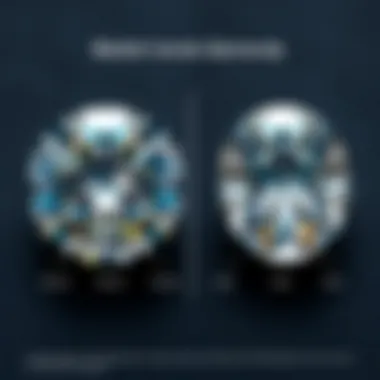
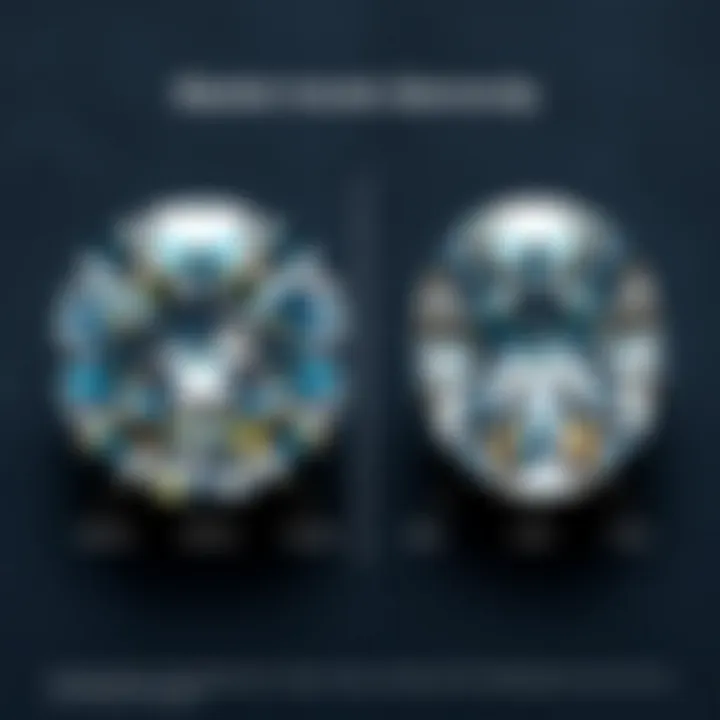
When one considers the visual differences between round and oval diamonds, the contrasts are readily apparent. Round diamonds tend to showcase a classic and timeless appeal, characterized by their symmetrical design and a brilliant radiance that maximizes light reflection. In contrast, oval diamonds, with their elongated shape, bestow a different kind of elegance. The longer silhouette often gives the illusion of greater size, which can be especially appealing for those seeking a more substantial presence without the requisite weight.
The differences in appearance also extend into how light interacts with the diamonds. Round diamonds, when expertly cut, reflect light in a way that creates a mesmerizing sparkle that is instantly recognizable. However, oval diamonds can generate a unique sparkle as well, but one that tends to be less uniform due to their shape. This distinction highlights how cut quality plays a crucial role in both types and ought to be a primary consideration when comparing them.
Perceived Size and Presence
The perception of size is another critical aspect distinguishing round and oval diamonds. While a round diamond of two carats holds its definitive weight, the oval diamond often gives an impression of being larger due to its elongated shape and surface area. This principle can be particularly advantageous when considering budget constraints, as the buyer can achieve a more oversized appearance without the associated price hike of heavier stones.
Different settings can enhance this perception as well; oval diamonds can pair well with various band styles, achieving a more substantial visual impact. However, it’s important to account for personal taste. If one prefers the classic presence of a round diamond, no amount of optical illusion can replace that innate timeless charm.
Brilliance and Sparkle
Brilliance and sparkle are the qualities that most drive a person’s love for diamonds. The cut of the diamond materially affects how light is captured and refracted. Round diamonds historically hold the crown in this regard because their shape enables a perfect array of facets designed for optimal light interaction. Each angle of a well-cut round diamond maximizes its brilliance, leading to an eye-catching sparkle.
Oval diamonds, while not as traditionally celebrated for brilliance, can exhibit lively flashes of light when cut to ideal proportions. The oval's unique faceting can tend to light in an attractive way, showcasing a spectacular flash in its own right. Nevertheless, buyers should be aware that the sparkle of an oval can appear less radiant than that of a round shape unless the cut quality is priority.
Choosing Between Round and Oval Diamonds
Selecting between round and oval diamonds can feel a bit like choosing between apples and oranges, each bearing its own unique allure and appeal. This decision is not merely about preferences; it intertwines personal style and broader market trends, which makes it crucial for buyers to grasp the nuances involved.
Personal Preference and Style
When it comes to personal preference, shape is a matter of taste, much like choosing a favorite color. Round diamonds, with their classic circular form, are often seen as timeless. They evoke a sense of tradition and familiarity that some find comforting. Many people picture a round diamond when they think of engagement rings, thanks in part to its heavy presence in pop culture and marketing.
Conversely, oval diamonds introduce an air of modern elegance to the equation. Their elongated shape can create a visually striking effect, making them a popular choice among those who favor contemporary styles. Some people even argue that ovals can provide an illusion of greater size due to their shape, which is appealing for those focusing on maximizing the visual impact of their gemstone.
- Round diamonds:
- Oval diamonds:
- Traditional and classic
- Recognizable standard in engagement rings
- Modern and distinctive
- Can appear larger than they are due to their shape
Choosing a diamond shape often reflects one’s personality and aesthetic preferences. A buyer who is drawn to vintage styles may lean toward round diamonds, while a more adventurous individual might prefer the bold nature of an oval.
Setting Compatibility
The choice of diamond cut can significantly impact the overall design and appearance of the ring setting. Round diamonds offer versatility, fitting beautifully into various settings—from solitaires to intricate halo designs. Their symmetry and brilliance allow them to complement an array of styles, ensuring they will look at home in a classic or even more contemporary setting.
In comparison, oval diamonds can also shine in diverse settings but certain designs truly accentuate their elongated shape. Settings that cradle the oval more openly can showcase their unique silhouette cleverly. For instance, an engagement ring with a three-stone setting featuring oval diamonds can be particularly enchanting, ensuring that the eye flows along with the contours of the gemstone.
- Round diamonds:
- Oval diamonds:
- Fit well with most settings
- Can enhance intricate designs
- Best highlighted in open settings
- Works well in three-stone designs that emphasize length
Market Trends for Diamond Shapes
Understanding market trends for diamond shapes is crucial for anyone interested in purchasing a diamond. This section delves into important aspects that help shape buyer choices and shed light on the evolving preferences within the industry. The significance of recognizing these trends lies not only in their impact on aesthetics but also on investment potential and the overall value of the diamonds in question. Because, when you look at the landscape of diamond purchases, it becomes clear that what’s hot today can cool off tomorrow. And knowing that fluctuating climate can be the key to making informed and strategic decisions.
Emerging Preferences in Consumers
As consumer tastes continue to evolve, a noticeable shift has emerged in the preferences for diamond shapes. While round diamonds have long held the crown as the king of the hill, oval diamonds have been slowly but surely carving out their niche in the market. Today’s buyers often seek individuality in their selections, wanting pieces that reflect their unique personalities.
- Trends Indicating Change: Recent surveys and market analyses show increased interest in fancy shapes, particularly ovals. The allure of ovals lies in their elongated silhouette, providing an illusion of a larger size, even when carat weight is comparable.
- Celebrity Influence: Celebrities often drive trends, and the likes of celebs flaunting oval diamonds on their fingers have certainly put them on the map for others.
- Customization: There’s a growing trend towards custom-designed pieces. People are opting for settings that accentuate the unique shape of ovals, pushing them into wider acceptance in mainstream jewelry styles.
In essence, discerning buyers are opting for ovals, tired of the standard options, which throws a curveball at the diamond market.
Investment Value Analysis
When it comes to the diamond industry, understanding the investment potential of various shapes can’t be glossed over. The bottom line is that while both shapes possess their own merits, the market response can differ tremendously based on trends and consumer appetite.
- Historical Data: Round diamonds have consistently held a higher resale value, largely because they are the most sought after. However, the tide seems to be shifting. As ovals gain traction, they are being viewed as a valuable long-term investment.
- Market Dynamics: The value of oval diamonds is determined by several metrics including rarity and demand. As trends slide toward ovals, accompanied by a limited supply, investors may find themselves with an appreciating asset, akin to a vintage wine that matures and grows in worth over time.
- Long-Term Outlook: It’s important to consider that market conditions can change. Trends in consumer preferences fluctuate—with shifts driven by fashion or economic cycles. Hence, investing in diamonds entails measuring risk against potential returns.
Takeaway: In the world of diamonds, staying informed about market trends can mean the difference between a good buy and a great investment. While round shapes remain a staple, the growing acceptance and popularity of oval diamonds suggest that they might just offer a competitive edge in portfolios over time.
In summary, as consumers lean towards unique diamond shapes and invest in pieces with true personal significance, the market for oval diamonds appears to be brightening. Keeping an eye on these trends not only enlightens buyers on preference patterns but also aids them in making choices that could yield significant value in the long run.
The End
The conclusion of this article serves as a vital junction, tying together the various themes presented in our analysis of 2 carat round versus 2 carat oval diamonds. It helps provide a rounded perspective on the nuances between these two popular diamond shapes, emphasizing their distinct characteristics and market trends. By synthesizing the key points made throughout this piece, we can appreciate the intricacies of each shape, reflecting on how they correspond to personal style, buyer preferences, and investment potential.
Summary of Key Takeaways
In reviewing the core insights, several key takeaways can be highlighted:
- Shape and Brilliance: Round diamonds often outshine their oval counterparts in terms of brilliance due to their cut, yet ovals offer a unique charm that can convey a sense of individuality.
- Market Trends: The popularity of diamond shapes fluctuates; while round diamonds traditionally dominate the market, oval diamonds are seeing a resurgence, appealing to modern sensibilities.
- Buyer's Preferences: Ultimately, choice comes down to individual taste and lifestyle. Considerations around setting compatibility and personal style are paramount for potential buyers.
In essence, whether one leans towards the classic appeal of round diamonds or the trendy flair of oval shapes, understanding these key points is crucial for making an informed decision.
Final Considerations for Buyers
As a buyer, consider this: the value of a diamond extends far beyond its carat weight or cut quality. Here’s a brief thought process to follow:
- Know Your Style: It's crucial to choose a diamond shape that resonates with your personality. Round diamonds bring a timeless elegance, while oval diamonds can offer an edge of modernity.
- Investment Mindset: Think about how potential appreciation in value plays into your decision, especially with how market preferences evolve. Round diamonds usually hold higher resale value, but ovals can be more unique, attracting collectors and connoisseurs.
- Quality Over Quantity: When it comes to diamonds, quality should never be overshadowed by the size of the carat. Look for excellent cut grades, regardless of the shape, to ensure you're investing in brilliance not just bulk.
All these factors should help in guiding the decision towards a gemstone that not only captivates but also compliments the buyer's taste and vision.
"A diamond may be forever, but getting it right is a choice that lasts longer than an eternity."
For further reading on diamond metrics, buyers may refer to sources like GIA for comprehensive guidance, or check out discussions on places like reddit.com/r/jewelry for community insights.